
Every AI conversation runs inside a limit. That limit is called the context window. It decides how much text the model can hold in its attention at any point, and once you cross that limit, older parts of the conversation start dropping off.
What is the context window?
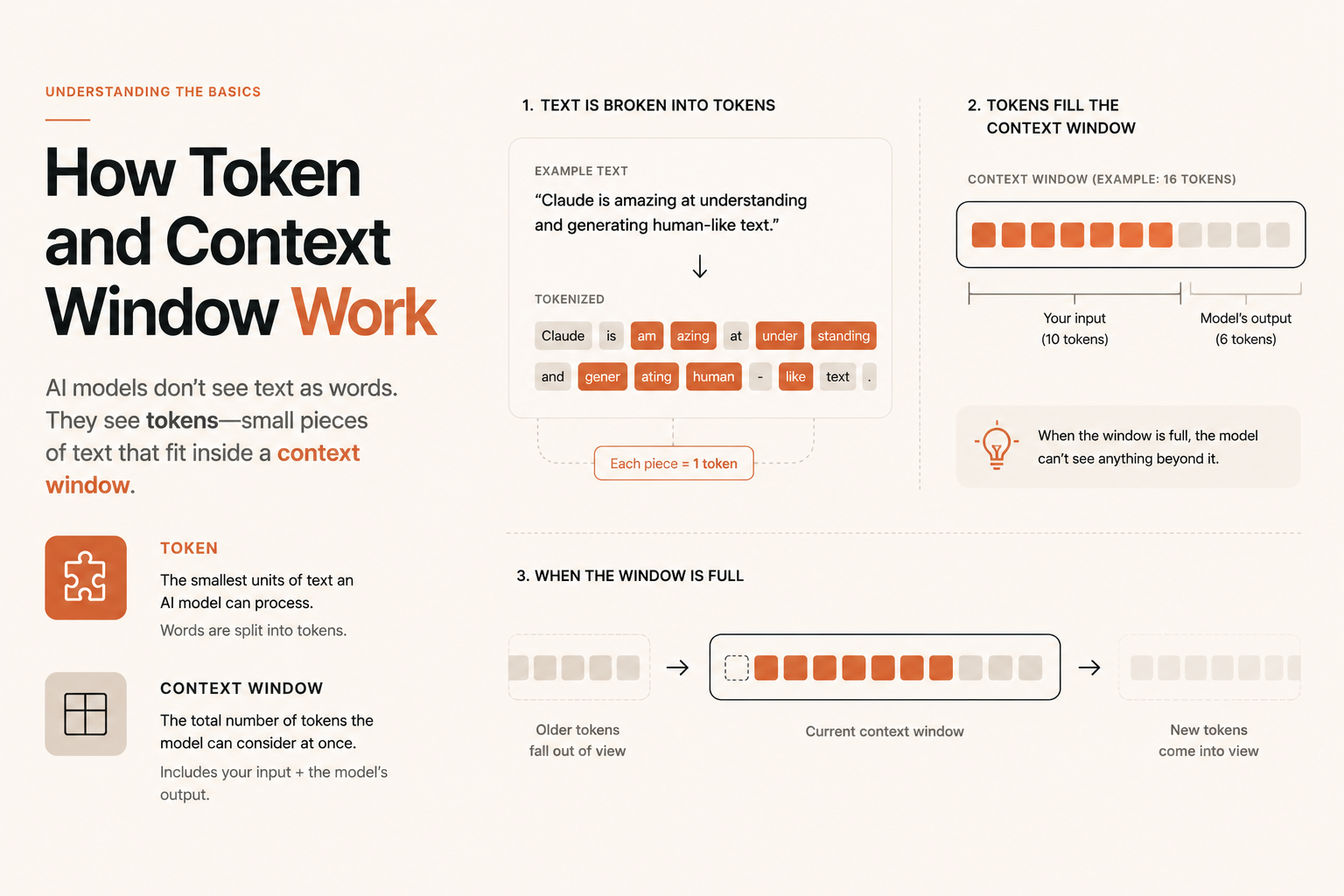
A context window is measured in tokens, not words. A token is roughly three quarters of a word. So a context window of 100,000 tokens is close to 75,000 words, which is about the length of a full novel.
Everything counts against this budget. The system instructions, your messages, the model's replies, any file you upload. It all adds up. Once the total goes past what the window allows, the model has to drop something, usually the earliest parts of the chat.
Think of it like a work desk. You can only spread out so many papers before you run out of space. A bigger desk lets you keep more documents open at once, so you can cross check page one against page fifty. A small desk means constant shuffling, and things you set aside earlier get buried or lost.
Why this actually matters
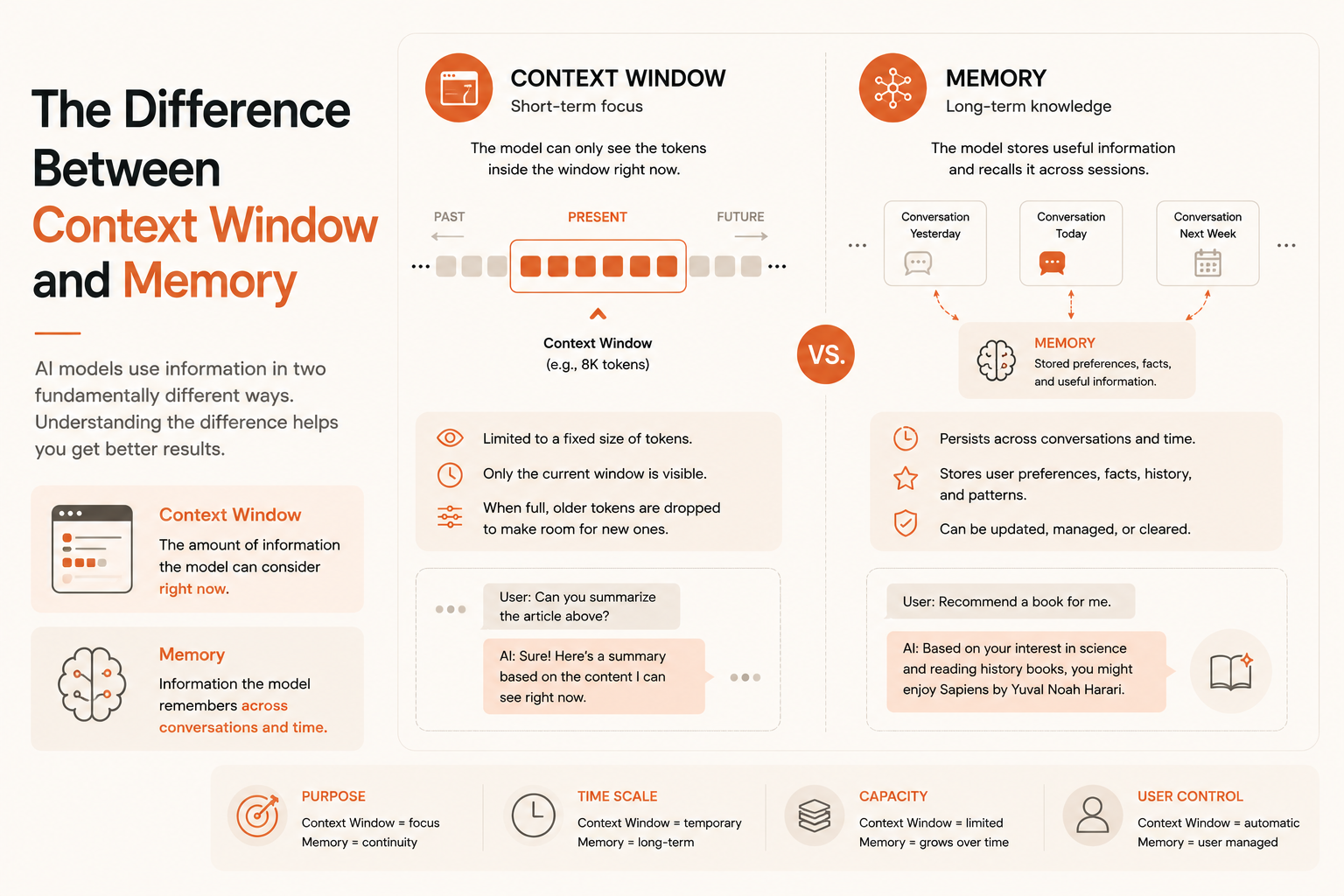
Inside a single conversation, the context window is the model's memory. It has no separate long term memory unless a product specifically builds one in. So if something was said early in a long chat, and the chat has grown past the window size, that detail is gone from view. The model is not lying when it forgets it, it genuinely cannot see it anymore.
This shows up in real use. Long debugging sessions, long writing projects, extended back and forth work, all of these can hit a point where the model repeats a question you already answered, or contradicts something it said earlier. Not because it is careless, but because that part of the conversation has scrolled out of the window.
Certain tasks are simply not possible without a large enough window. Reading a long contract and answering questions about specific clauses needs the whole contract in view. Reviewing a codebase where one file depends on another needs both files loaded together. A short window caps how complex a task can get in one sitting. A large window opens up real document level and codebase level work.
There is also a cost side to this. More tokens means more computation. That usually means slower replies and higher API cost if you are paying per token. Bigger is not automatically better, if the task does not need that much context, you are just paying for space you will not use.
One more thing worth knowing, even inside a large window, models do not treat every part equally well. Details buried in the middle of a very long document sometimes get missed, while the start and the end tend to get more attention. This is sometimes called the lost in the middle problem. So a large context window helps, but it does not fully solve the memory problem, it just raises the ceiling.
Context window versus memory features
Do not confuse the context window with the memory features some AI products now offer. The context window is tied to one conversation. Close the chat, and it resets. Memory features are a separate system built to remember facts about you across different conversations, and they feed relevant bits back into the context window when needed. The two work together, but they are not the same thing.
Practical takeaway
If you are working with an AI model on a long task, plan around this limit rather than fighting it. Break long documents into focused chunks when you can. Restate key constraints if a conversation has been running for a while. And do not assume more context is always the better choice, match the window size to what the task actually needs.